

Accelerated Learning Pathways in Healthcare
At Kern Valley Medical College, we are committed to building the next generation of healthcare professionals through fast-paced, career-focused training. Our programs are designed to meet the needs of today’s medical community while providing engaging, supportive, and rigorous learning experiences.
We believe quality education should be accessible and affordable, which is why many of our students are able to graduate debt-free. With flexible payment options, streamlined program lengths, and real-world training, KVMC makes it possible to pursue a rewarding healthcare career without the financial burden.
From hands-on clinical experiences to industry-relevant coursework, each program is intentionally crafted to equip students with the knowledge, confidence, and practical skills needed to thrive in the healthcare field. Whether you're beginning your journey or advancing your career, KVMC offers a clear pathway to professional growth—and a future full of opportunity.
Explore Your Healthcare Career Options
Medical Assistant Program
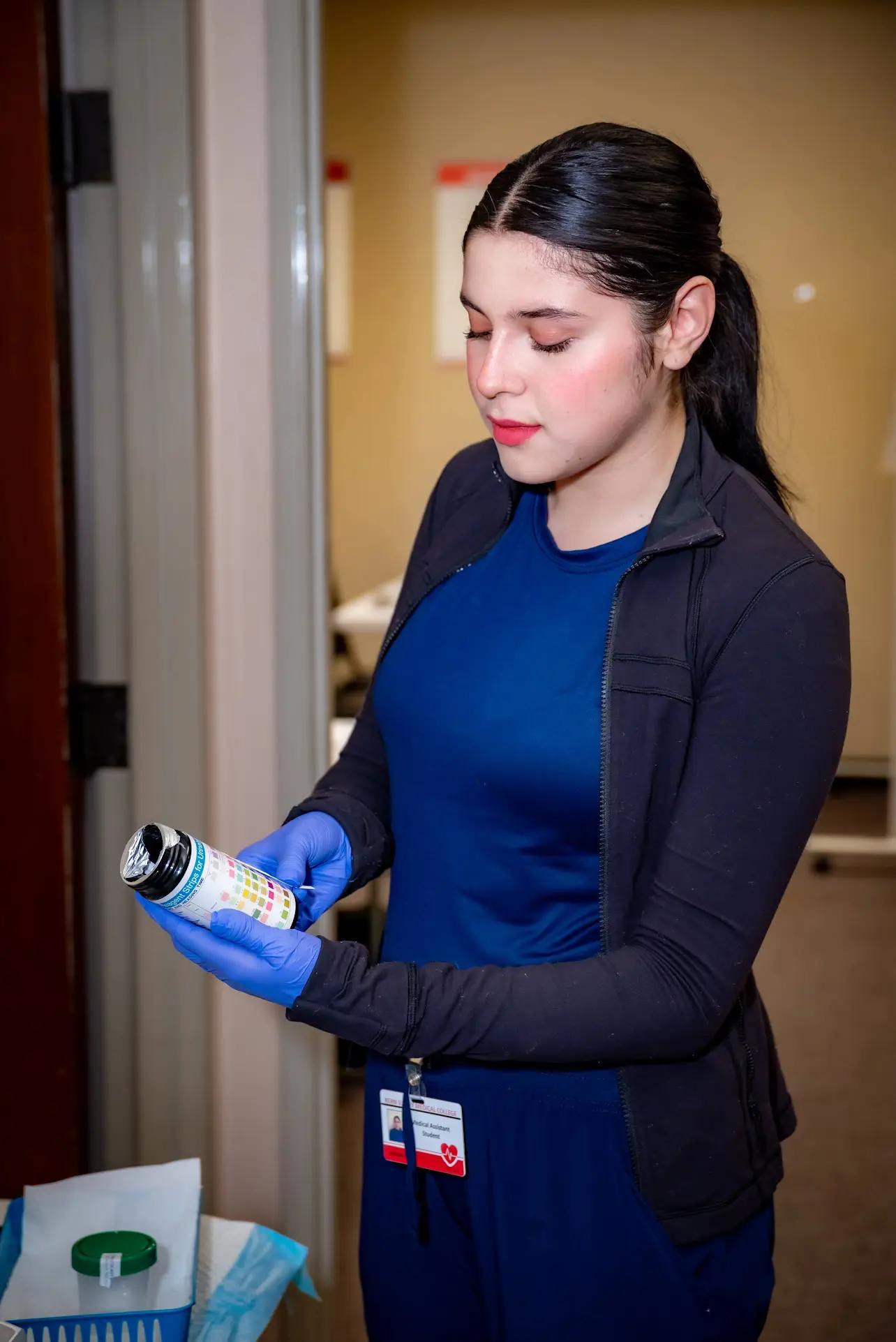
If you are passionate about healthcare and eager to begin a meaningful career, the Medical Assistant Program at Kern Valley Medical College offers a fast, effective pathway into the medical field. This 5-month program provides comprehensive, hands-on training designed to prepare students to work confidently alongside physicians, nurses, and other healthcare professionals.
Students receive a strong foundation in clinical procedures, patient care, and medical office responsibilities—equipping them with the practical skills and professional readiness needed to succeed in today’s healthcare environments.
Admission Requirements
Applicants must meet the following criteria:
- 18 years of age
- High school diploma, GED, or equivalent (students must pass entry exam with a 70%)
- Valid government-issued ID
- Up-to-date immunizations (required by clinical sites)
- Background check and drug screening (if required)
- Certification Eligibility
Program Overview
The Medical Assistant Program at Kern Valley Medical College is a comprehensive 5-month course designed to prepare students for the wide range of responsibilities required in today’s healthcare settings. The program provides a strong foundation in both administrative and clinical competencies.
Students Will Learn:
- Medical terminology, anatomy, and physiology
- Administrative responsibilities, including scheduling, charting, and electronic health records
- Clinical skills such as vital signs, injections, specimen collection, and patient preparation
- Professional communication and workplace readiness
- Safety and infection control procedures
Program Structure
- Classroom Instruction: Engaging lectures, demonstrations, and interactive learning
- Hands-On Clinical Skills Training: Practice using real medical equipment and simulation labs
Tuition & Fees Overview: Graduate Debt-Free!
- Tuition: $$3,925
Additional fees may include registration, uniforms, textbooks, supplies, background check fees, and state exam fees.
Payment plans are available for all programs.
Clinical Externship
A distinctive component of the program is the 160-hour externship, which provides students with real-world experience in a medical facility. During this externship, students will:
- Apply clinical and administrative skills in real patient care settings
- Work under the supervision of experienced healthcare professionals
- Build confidence and strengthen professional communication skills
- Network with potential employers and gain valuable work experience
Certification Eligibility
Upon successful completion of the program and the 160-hour clinical externship, students are eligible to take the national Medical Assistant certifying exam through the California Certifying Board for Medical Assistants CCBMA.
Earning this certification enhances employment opportunities and demonstrates competency in both clinical and administrative medical assisting skills.
Career Opportunities
Graduates of the Medical Assistant Program are prepared for a variety of entry-level positions within the healthcare industry. Medical Assistants are in high demand and can work in multiple settings, including:
Employment Settings
- Medical offices and private practices
- Urgent care centers and outpatient clinics
- Specialty care facilities (pediatrics, cardiology, women’s health, geriatrics, etc.)
- Community health centers
- Ambulatory care centers
Certified Phlebotomy Technician (CPT1)
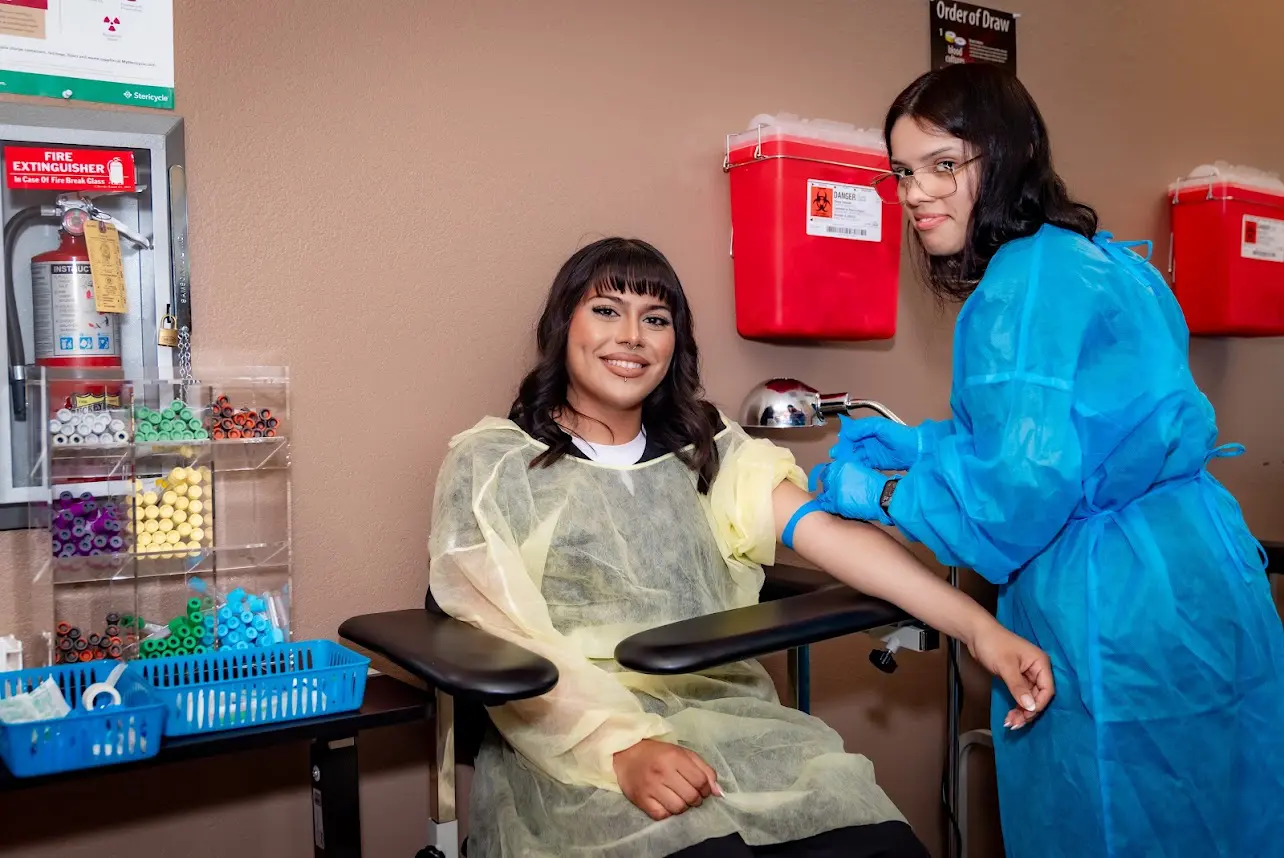
The 5-week Certified Phlebotomy Technician (CPT1) Program at Kern Valley Medical College provides students with the essential knowledge, hands-on training, and clinical experience required by the California Department of Public Health (CDPH) – Laboratory Field Services (LFS). This accelerated program prepares students to perform blood collection safely and professionally in hospitals, laboratories, clinics, and diagnostic centers.
Admission Requirements
Applicants must meet the following criteria:
- 18 years of age
- High school diploma, GED, or equivalent
- Valid government-issued ID
- Up-to-date immunizations (required by clinical sites)
- Background check and drug screening (if required)
- One official and one unofficial transcript
- I highly recommend having medical experience (Medical Assistant, CNA, EMT)
- Students must pass the entry exam with 70%
CDPH-Required Training Components
Our CPT1 program follows all state requirements to ensure eligibility for California licensure.
20 Hours – Basic Phlebotomy Didactic Instruction
Includes foundational topics such as:
- Anatomy & physiology of the circulatory system
- Infection control & safety
- Medical terminology
- Specimen handling & processing
- Legal & ethical responsibilities
20 Hours – Advanced Phlebotomy Didactic Instruction
Focuses on:
- Complicated blood draws
- Special collection procedures
- Pediatric and geriatric techniques
- Quality assurance and regulations
Clinical Externship
Students complete a 40-hour supervised externship at an approved clinical site where they:
- Perform required blood draws
- Develop real-world phlebotomy experience
- Interact with patients and healthcare teams
- Practice safety procedures and professionalism
Eligibility for State Certification
Upon successful completion of all program components—didactic instruction, venipunctures, skin punctures, and externship—students are eligible to sit for the state exam through NHA, then apply to CDPH/LFS for their Certified Phlebotomy Technician (CPT1) license.
Tuition $1,800
Not included in tuition
- Certifying exam NHA- $ 140-170
- Phlebotomy license -$100 -$120
- Black Scrubs
- Textbook-Phlebotomy Essential 8th edition (Amazon $60-90)
ISBN-978-1-284-26348-0
Certified Nurse Assistant
The 4-Week Nurse Assistant Training Program (NATP) at Kern Valley Medical College prepares students for a rewarding career as Certified Nursing Assistants (CNAs). This accelerated program focuses on essential caregiving skills, patient safety, communication, and adult health care while emphasizing professionalism and compassion in all aspects of patient support.
Through a combination of classroom instruction, hands-on skills lab, and supervised clinical training, students learn how to safely assist patients with daily activities, mobility, personal care, and basic health monitoring. The curriculum is designed to meet state training requirements and provide a strong foundation for entry-level patient care roles.
Upon successful completion of the program, graduates are eligible to take the state competency evaluation exam to become certified CNAs in California.
Admission Requirements
Applicants must meet the following requirements to enroll in the 4-Week Nurse Assistant Training Program at Kern Valley Medical College:
- 18 Years of Age or Older
- High School Diploma, GED, or Equivalent
- Proof of high school completion is recommended but not required by CDPH.
- Valid Government-Issued Photo ID
- Social Security Number
- TB Test & Immunization Requirements
- Students must provide up-to-date health records, which may include:
- TB test (within 90 days of clinical start date)
- Flu vaccine (if training during flu season)
- COVID-19 vaccine (depending on clinical site)
- Other immunizations as required by clinical partners
- Background Check & Live Scan Fingerprinting
- Physical Exam
- Students must pass the entry exam with 70%.
Tuition & Fees Overview: Graduate Debt-Free!
- Tuition: $$1,900
Additional fees may include registration, uniforms, textbooks, supplies, background check fees, and state exam fees.
Payment plans are available for all programs.
Curriculum Structure
The 4-Week Nurse Assistant Training Program (NATP) at Kern Valley Medical College follows a structured curriculum that combines classroom instruction, hands-on skills training, and supervised clinical experience. This comprehensive approach ensures students gain the knowledge, confidence, and practical abilities needed to succeed as Certified Nursing Assistants (CNAs).
Classroom Instruction
Students participate in engaging lectures, discussions, and demonstrations covering:
- Patient care techniques
- Safety and infection control protocols
- Communication and interpersonal skills
- Legal and ethical responsibilities in healthcare
This foundational knowledge prepares students for the clinical and hands-on portions of the program.
Skills Lab
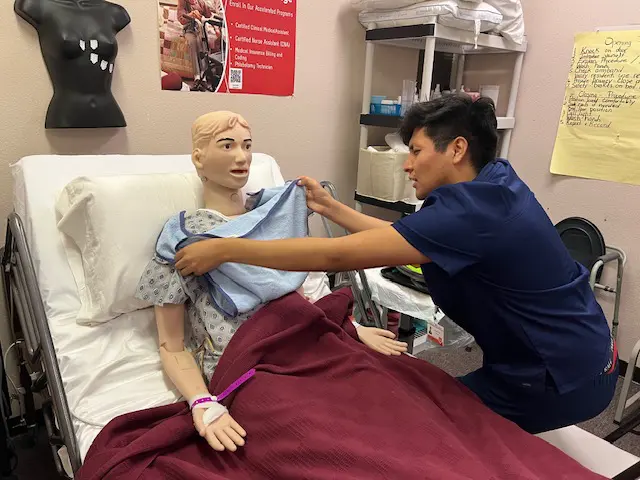
In a supervised lab setting, students practice essential CNA skills in a controlled, supportive environment. Training includes:
- Bedmaking and patient positioning
- Vital signs and patient assessment
- Safe transfer and mobility techniques
- Personal care and hygiene assistance
This hands-on practice builds confidence and ensures students can perform required tasks safely and accurately.
Clinical Experience
Students complete supervised clinical training in an approved healthcare facility. During this real-world experience, students:
- Provide direct patient care
- Apply classroom learning to actual patient scenarios
- Work under the guidance of licensed nurses
Clinical training is essential for meeting state requirements and preparing students for the certification exam.
Assessment and Evaluation
Student progress is measured through:
- Written exams
- Skills demonstrations
- Clinical performance evaluations
These assessments ensure students meet competency standards required for program completion and eligibility for CNA certification.

Patient Care Technician (PCT) Program
Accelerated Training for High-Demand Healthcare Careers
The 8-weeks Patient Care Technician Program at Kern Valley Medical College is designed to prepare students for direct patient care roles in hospitals, clinics, specialty practices, and long-term care settings. This fast-paced, skills-based program combines Certified Nursing Assistant (CNA) foundations with Phlebotomy and EKG training to create a multi-skilled healthcare professional.
Students gain hands-on training in patient care techniques, clinical procedures, and safety standards, followed by real-world experience through our affiliated clinical partners.
Admission Requirements
To enroll in the 8-weeks, Patient Care Technician Program, applicants must meet the following:
- 18 years of age
- High school diploma, GED, or equivalent
- Valid government-issued ID
- Active CNA License
- Immunization Compliance
- TB screening
- MMR
- Varicella
- Hepatitis B series
- Tdap
- Influenza vaccine
- COVID-19 vaccine (as required by externship sites)
- Background check & drug screening (as required)
- Students must pass the entry exam with 70%
Tuition & Fees Overview: Graduate Debt-Free!
- Tuition: $$3,300
Additional fees may include registration, uniforms, textbooks, supplies, background check fees, and state exam fees.
Payment plans are available for all programs.
Program Components:
Students receive comprehensive training in:
- Patient safety and communication
- Activities of daily living (ADLs)
- Vital signs and patient observation
- Medical terminology
- Infection control (OSHA & CDC standards)
- Body mechanics & fall prevention
- Proper use of mobility devices
- Phlebotomy procedures and specimen collection
- EKG procedures and cardiac monitoring basics
- Externship- Davita Dialysis Center
Career Opportunities
Graduates of the PCT Program are prepared for employment in:
- Hospitals
- Dialysis centers
- Medical clinics and specialty practices
- Skilled nursing and long-term care facilities
- Rehabilitation centers
- Assisted living and hospice environments
- Home health agencies
Career Outlook:
PCTs in California typically earn $18–$25+ per hour, depending on location and facility.
This program also provides a strong foundation for future advancement in:
- Licensed Vocational Nursing (LVN)
- Registered Nursing (RN)
- Medical Assistant roles
- Phlebotomy specialization
- Dialysis Technician careers
MEDICAL BILLING & CODING HYBRID
Medical Billing and Coding Specialists play a vital administrative role in the healthcare system. They interpret and convert clinical information into standardized codes, prepare and submit insurance claims, and help ensure providers receive accurate and timely reimbursement. Their work supports patient care, regulatory compliance, and the financial stability of healthcare organizations.
Billing and coding professionals collaborate with healthcare providers, insurance companies, and patients to maintain complete, accurate, and compliant health records. Many positions also offer flexibility to work remotely.
Admission Requirements
Applicants must meet the following criteria to enroll:
- 18 years of age or older
- High School Diploma
- Background check & drug screening (as required)
- Government-issued ID
- All students must pass the entry exam with 70%
Tuition & Fees Overview: Graduate Debt-Free!
- Tuition: $$4,000
Additional fees may include registration, uniforms, textbooks, supplies, background check fees, and state exam fees.
Payment plans are available for all programs.
Externship – Optional
As part of the Medical Billing & Coding Program at Kern Valley Medical College, it is recommended that students complete a 200-hour supervised externship in an approved healthcare setting if they plan to take the certifying exam through NHA.
This externship provides real-world experience in medical billing processes, insurance claims, coding systems, electronic health records, and front-office workflows.
Note: Students who are not going to sit for the certifying exam do not have to participate in the externship.
Externship Purpose
The externship is designed to bridge classroom learning with hands-on, practical experience. Students gain exposure to:
- ICD-10-CM, CPT, and HCPCS coding
- Insurance verification & authorization
- Medical claims submission & follow-up
- Revenue cycle management
- Electronic health record (EHR) systems
- HIPAA-compliant documentation
- Patient billing & account management
Externship Placement
Students may be placed in:
- Medical clinics
- Specialty practices
- Billing & coding companies
- Outpatient centers
- Healthcare administrative offices
Placement is arranged through KVMC’s externship coordinator. Students must meet all program requirements—attendance, GPA, and professionalism—before beginning externship.
Career Opportunities
Graduates are prepared for employment in:
- Hospitals
- Medical clinics and outpatient centers
- Specialty physician offices
- Ambulatory surgery centers
- Insurance companies
- Billing and coding service companies
- Government health agencies
Salary Outlook
Medical Billing & Coding Specialists in California typically earn $20–$28 per hour, depending on experience, credentials, and location.
Certification Preparation
This program prepares students to sit for the following national certification exams:
- ✔ NHA – Certified Billing & Coding Specialist (CBCS)


Medical Terminology in Spanish – Professional Development Course- 100% Online
The Medical Terminology in Spanish course is a non-credit, professional development class designed for healthcare professionals who want to enhance patient communication with Spanish-speaking populations. The class focuses strictly on healthcare terminology, not basic Spanish language fundamentals. Students are expected to have basic conversational Spanish ability before enrolling.
Tuition & Fees Overview:
Tuition: $400 (Additional fees may include registration and textbooks.)
Course Overview
Course Overview
This 6-week online course provides healthcare professionals with essential Spanish medical terminology used in clinical conversations, patient interviews, assessments, and basic instructions. The class focuses on practical communication rather than Spanish grammar or beginner Spanish concepts.
Prerequisites
- Recommended: Basic conversational Spanish
- No prior medical terminology experience required
- No certificate or college credits are awarded (professional development only)
What You Will Learn
- Anatomy and physiology terms in Spanish
- Patient history & assessment terminology
- Symptom descriptions and medical complaints
- Instructions for procedures, exams, and treatments
- Emergency & safety-related terminology
- Common clinical phrases used in medical visits

Community Impact
Kern Valley Medical College is deeply rooted in the belief that strong communities are built through service, education, and opportunity. Our programs are designed not only to prepare skilled healthcare professionals, but also to strengthen the local workforce and expand access to quality patient care throughout the region.
We proudly partner with clinics, hospitals, and community organizations to provide students with meaningful, real-world experience while supporting the healthcare needs of the communities we serve. Through outreach activities, volunteer efforts, and collaborative initiatives, KVMC is committed to giving back and making a lasting impact.
Our students are encouraged to embrace professionalism, compassion, and civic responsibility—values that extend far beyond the classroom. By choosing KVMC, you are joining an institution dedicated to uplifting individuals, empowering families, and contributing to a healthier, stronger community.
For more information about our community partnerships or to learn how you can get involved, we welcome you to contact us.